
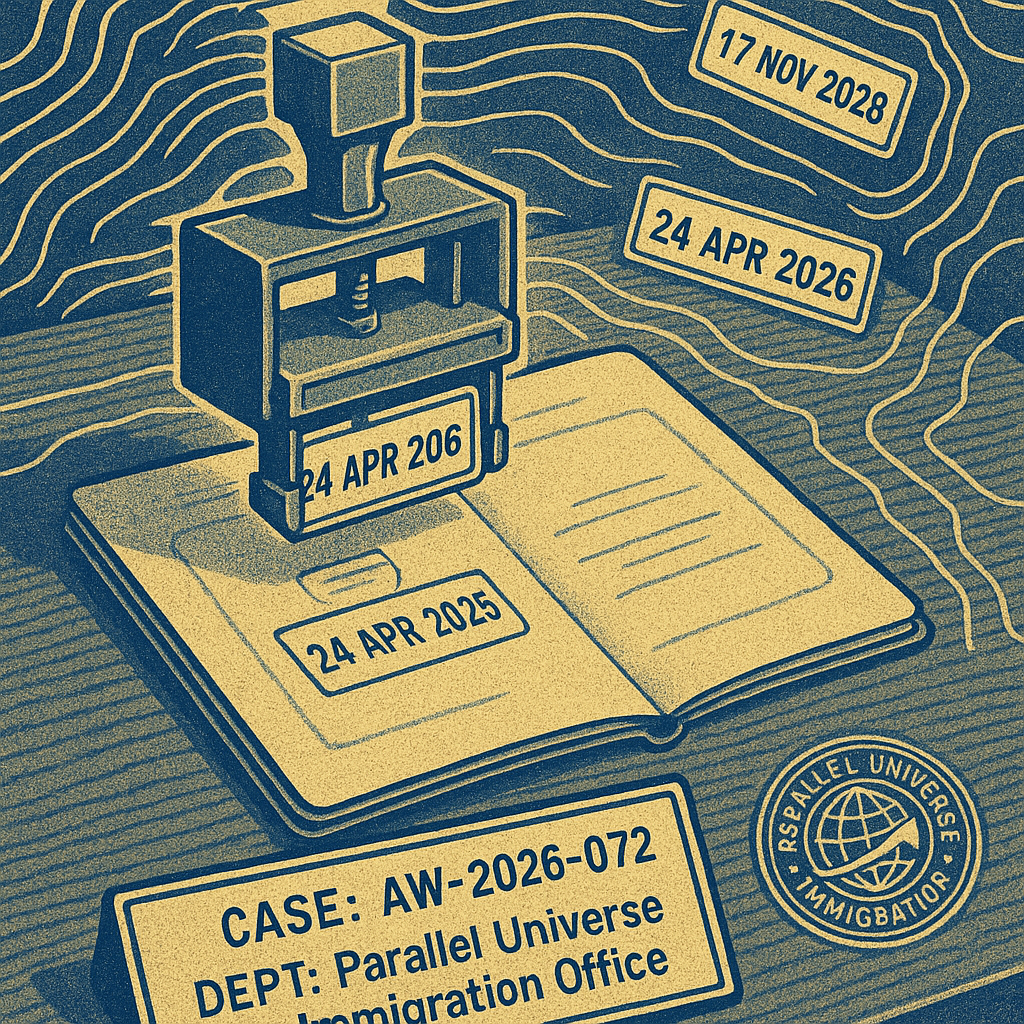
Parallel Universe Immigration Office — AW-2026-072 — Self-Stamping Passport (Pre-Approved, Retrospective)
Memo: CASE_ID: AW-2026-072 | DEPARTMENT: Parallel Universe Immigration Office | CATEGORY: Discovered Objects | STATUS: ARCHIVED
Section 1: Object Description — booklet, 32 pages, cover reads “PASSPORT” in a font that insists.
Section 2: Primary Function — stamps itself upon being looked at, citing “visual consent” as signature.
Section 3: Observed Anomaly — entry stamps appear dated tomorrow, then apologize and reschedule to yesterday.
Section 4: Citizenship Claim — lists holder as “Resident of Nearly,” with a blank field for “Actual.”
Section 5: Security Features — watermark shows a border that moves away when approached by a ruler.
Section 6: Visa Pages — each page pre-filled with “APPROVED,” followed by a footnote requesting denial for balance.
Section 7: Interview Transcript — object answered questions by flipping to relevant pages before they were asked.
Section 8: Admissibility Determination — admissible to jurisdictions that require uncertainty; inadmissible to maps.
Section 9: Handling Instructions — store closed; do not maintain eye contact; do not say “welcome” within three meters.
Section 10: Disposition — archived in Drawer 7B (Also Known As 7A), pending the outcome of its earlier appeal.
Section 11: Audit Note — the passport has already countersigned this memo in ink that is still deciding to exist.